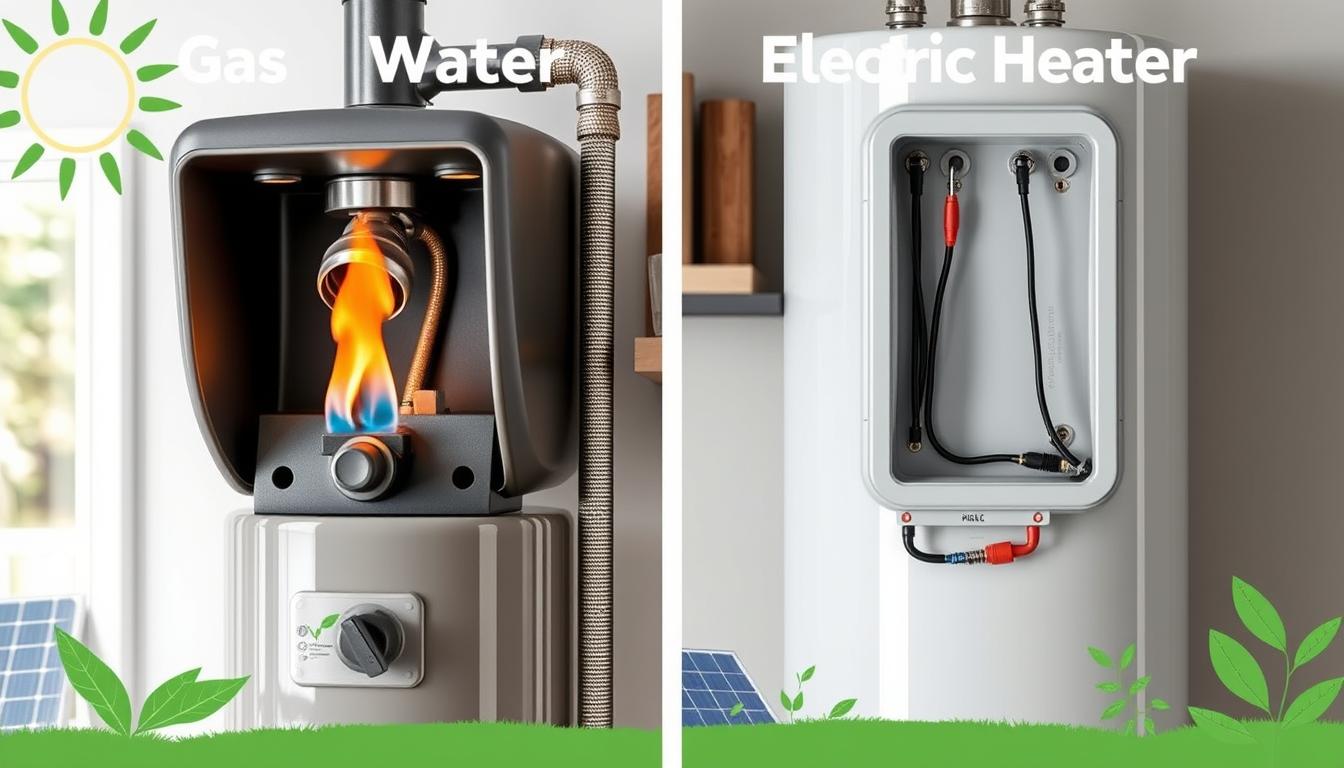
Choosing the right water heater for your home can be tough. The debate between gas and electric water heaters is ongoing. Homeowners consider many factors to make the best choice. This guide will compare Gas vs Electric Water Heater in detail. We’ll look at costs, performance, efficiency, and more. Whether you’re updating or installing a new system, we’ll help you make a wise choice.
Modern homeowners have to make big decisions about water heating technology. Each type has its own benefits and drawbacks. The right choice depends on your home, budget, and energy goals.
Hot water is key in your home’s comfort, from the kitchen to the bathroom. Knowing the differences between gas and electric water heaters helps you choose the best. You’ll get optimal performance, energy efficiency, and value for your home.
Understanding the Basics of Water Heater Types
Choosing between a gas vs electric water heater depends on several crucial factors. Homeowners must consider fuel source availability, energy efficiency, and performance characteristics when selecting the right water heating system for their needs.
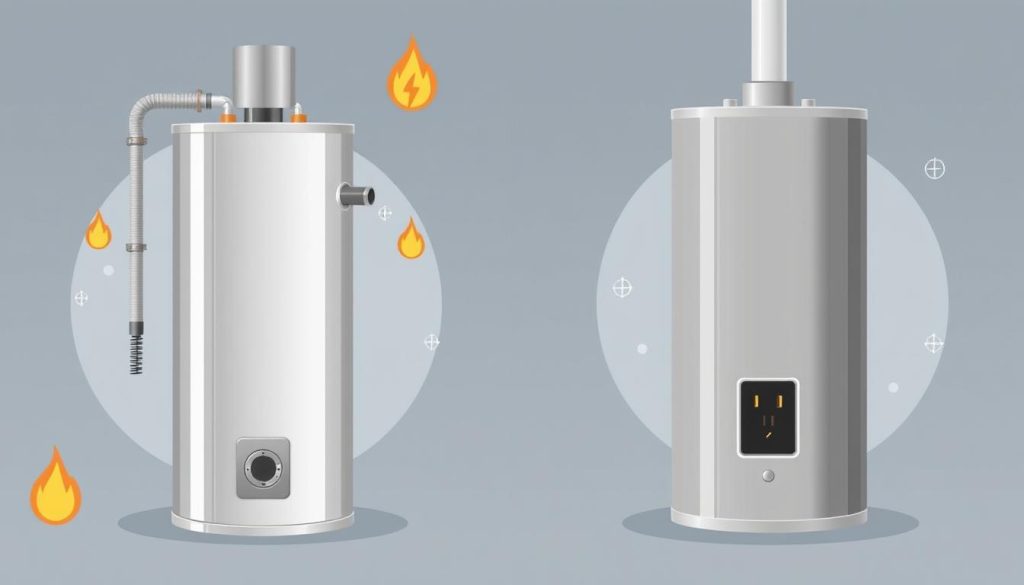
Water heaters come in two primary types: gas and electric models. Each offers unique advantages and operates through distinct mechanisms to provide hot water for household use.
How Gas Water Heaters Work
Gas water heaters use natural gas or propane as their fuel. The heating process involves:
- A burner that ignites gas beneath the tank
- Heat transfer through metal pipes and water chamber
- Combustion gases vented through a flue
How Electric Water Heaters Work
Electric water heaters use electrical resistance elements to generate heat. Key operational characteristics include:
- Heating elements suspended inside the water tank
- Electric current converting to thermal energy
- Direct heat transfer to water molecules
Key Components and Features
Both water heater types share essential components such as:
- Insulated storage tank
- Temperature and pressure relief valve
- Thermostat for temperature control
The choice between gas and electric water heaters depends on your home’s infrastructure, fuel source availability, and energy efficiency requirements.
Initial Purchase and Installation Costs
Choosing a water heater means looking at the initial costs. The prices for gas and electric models differ a lot. This affects how much homeowners spend.
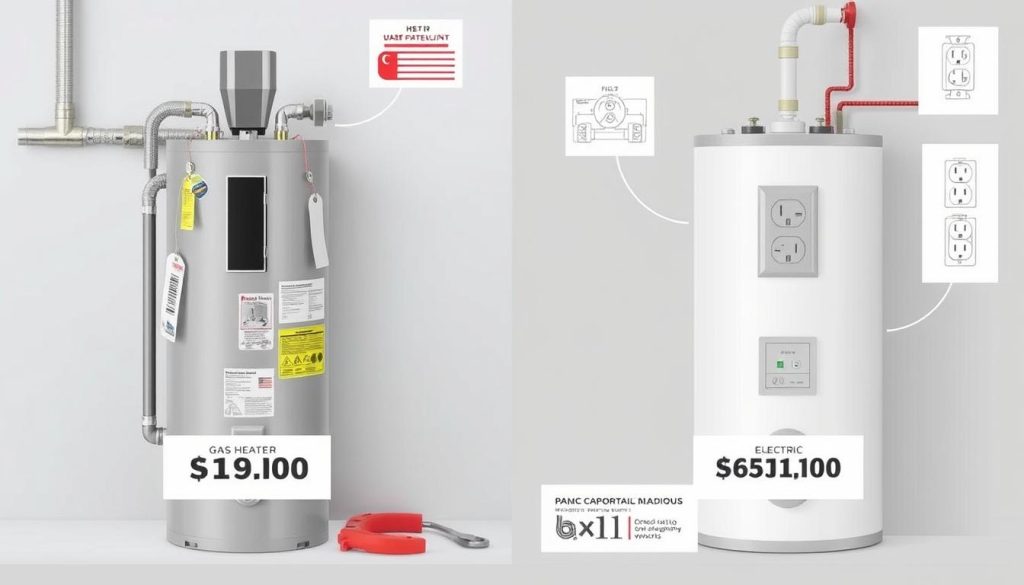
Gas water heaters cost more to buy than electric ones. Installing gas units is also more complicated. They usually need a professional to set up.
- Gas water heater average cost range: $700 – $2,000
- Electric water heater average cost range: $300 – $1,000
- Professional installation fees: $200 – $800
But, there’s a silver lining. Homeowners can get help with installation costs. Many places offer rebates for energy-saving water heaters.
| Water Heater Type | Average Unit Cost | Potential Energy Rebates |
|---|---|---|
| Gas Water Heater | $1,200 | Up to $300 |
| Electric Water Heater | $600 | Up to $200 |
Think about more than just the upfront costs. Long-term energy efficiency and savings are key. They can make your investment worthwhile.
Energy Efficiency Comparison
It’s important for homeowners to know about water heater energy efficiency. This knowledge helps in making a smart, cost-effective choice. Gas and electric water heaters have different energy performance. This affects both long-term costs and the environment.
Energy Factor (EF) Ratings Explained
The Energy Factor (EF) rating is key to understanding water heater efficiency. It shows how well a water heater turns energy into hot water. The higher the EF rating, the more energy-efficient it is:
- Gas water heaters usually have EF ratings between 0.5 and 0.7
- Electric water heaters often range from 0.9 to 1.0
- Newer models with advanced technology can achieve even higher ratings
Annual Energy Consumption
| Water Heater Type | Average Annual Energy Use | Estimated Annual Cost |
|---|---|---|
| Gas Water Heater | 200-300 therms | $250-$350 |
| Electric Water Heater | 4,000-5,000 kWh | $400-$500 |
Peak Performance Times
Energy efficiency changes with how you use the water heater. Gas water heaters heat up faster, making them better during busy times. Electric water heaters work well for steady use but might not handle many hot water needs at once.
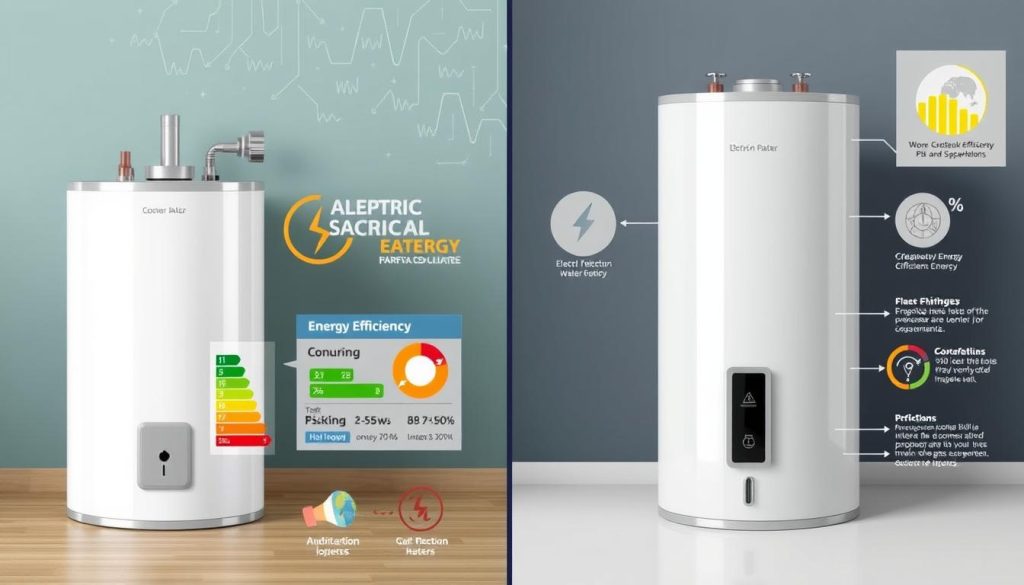
Choosing the right water heater means looking at energy efficiency and your home’s needs. Think about your household size, hot water use, and local energy prices. This helps make a choice that saves money and keeps you comfortable.
Operating Costs and Long-term Savings
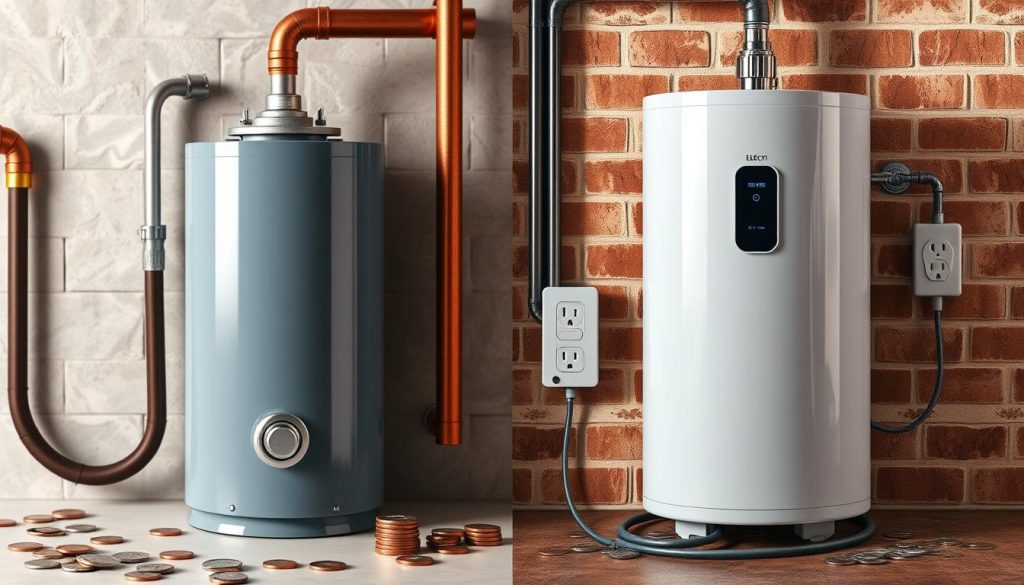
Choosing the right water heater means understanding costs and energy use. Homeowners need to look at the money side of gas vs electric water heater. This helps them make a smart choice.
Water heater costs can affect your budget a lot. Gas heaters usually cost less to run than electric ones. But, prices can change based on where you live and the heater’s efficiency.
- Gas water heaters often have cheaper fuel costs
- Electric water heaters can have higher monthly expenses
- Energy efficiency ratings play a crucial role in long-term savings
To figure out savings, you need to consider several things:
| Cost Factor | Gas Water Heater | Electric Water Heater |
|---|---|---|
| Initial Installation | $700-$2,000 | $300-$1,500 |
| Annual Operating Costs | $250-$350 | $400-$600 |
| Average Lifespan | 10-15 years | 10-12 years |
Energy efficiency is key when looking at long-term costs. Modern, efficient water heaters save a lot of money over time. Look for Energy Star certified models to get the most value.
Making the right choice in water heaters can save you money. Think about your local energy prices, how much hot water you use, and any rebates available.
Gas vs Electric Water Heater: Performance Analysis
Choosing a water heater means looking at performance first. Gas and electric water heaters have big differences. This makes picking the right one key for homeowners wanting the best hot water.
Recovery Rate Comparison
Recovery rate shows how fast a water heater gets hot water back after use. Gas water heaters usually beat electric ones in this area:
- Gas water heaters recover 50-60 gallons per hour
- Electric water heaters recover 20-30 gallons per hour
- Tankless water heaters give instant hot water with no wait
Hot Water Output Capacity
Hot water output varies between gas and electric water heaters. Tankless water heaters are a new option for homes needing flexible hot water.
| Water Heater Type | Average Capacity | Best For |
|---|---|---|
| Gas Tank Water Heater | 40-75 gallons | Large families |
| Electric Tank Water Heater | 30-60 gallons | Small to medium households |
| Tankless Water Heaters | Continuous flow | Efficient, space-saving solutions |
Temperature Consistency
Keeping the water temperature steady is important for comfort. Gas water heaters often keep temperatures more consistent than electric ones. Tankless water heaters are great at keeping the temperature just right, even when lots of hot water is needed at once.
Installation Requirements and Space Considerations
Choosing the right water heater means looking at installation needs and space. Your home’s layout and fuel options are key to picking the best water heater.
Gas and electric water heaters need different setups. Knowing these needs helps you decide between gas and electric.
Key Installation Considerations
- Electrical connections for electric water heaters
- Venting requirements for gas water heaters
- Clearance space around the unit
- Proximity to fuel sources
Fuel source is important when picking a water heater. Homes with natural gas lines work well with gas heaters. Without gas, electric might be better.
Space Evaluation Checklist
- Measure available installation area
- Check ceiling height
- Verify electrical panel capacity
- Assess ventilation requirements
Pro tip: Get a professional plumber to check your home’s needs. They can make sure everything fits right.
Maintenance and Repair Expectations
Water heaters need regular care to last longer and save money. Keeping them in good shape helps avoid expensive repairs and keeps them working well.
Common Issues and Solutions
Homeowners should watch out for common water heater problems:
- Sediment buildup can make them less efficient
- Strange noises might mean internal damage
- Water temperature might not stay the same
- Leaks can happen at connections or the tank base
Professional Service Requirements
For complex systems, getting a pro is key. Experts say to get an annual check-up to:
- Look at electrical connections
- Test the pressure relief valves
- Flush out sediment from the tank
- Check anode rods for rust
DIY Maintenance Tips
Homeowners can help their water heater too:
- Test the temperature and pressure relief valve every year
- Drain and flush the tank every six months
- Wrap hot water pipes to save heat
- Look for signs of wear or rust
Following these tips can greatly improve your water heater’s life and lower costs.
Environmental Impact and Sustainability
Water heaters are big users of energy in homes and have a big impact on the environment. More people want to use eco-friendly options that are good for both comfort and the planet. Knowing how different water heaters affect the environment helps us make better choices.
Hybrid water heaters are a great choice for cutting down on carbon emissions. They use a mix of heating methods to use less energy. This makes them better for the planet than older models.
- Traditional gas water heaters produce direct carbon emissions
- Electric water heaters depend on regional power grid sustainability
- Hybrid water heaters optimize energy consumption
The impact of water heaters on the environment depends on a few key things:
| Water Heater Type | Carbon Emissions | Energy Efficiency |
|---|---|---|
| Gas Water Heater | High direct emissions | 60-70% efficiency |
| Electric Water Heater | Indirect emissions | 90-95% efficiency |
| Hybrid Water Heaters | Low indirect emissions | Up to 200% efficiency |
Using renewable energy makes water heating systems even better for the planet. Solar-assisted hybrid water heaters are at the forefront of reducing environmental harm. They cut down on the need for electricity from the grid and fossil fuels.
If you want to lower your carbon footprint, think about hybrid water heaters. They use less energy and help protect the environment in many ways.
Safety Considerations and Building Codes
Water heater safety is very important when installing one at home. Both gas and electric water heaters need special safety steps. These steps help keep homeowners safe and make sure the water heater works right.
It’s key to know what you need when picking and installing a water heater. Local building codes help figure out the safety rules you must follow.
Ventilation Requirements
Good ventilation is a big safety issue, mainly for gas water heaters. It stops dangerous gas from building up and helps the heater work its best.
- Gas water heaters need direct or atmospheric venting
- There must be enough space around the unit
- Good air flow stops carbon monoxide dangers
Emergency Shutdown Procedures
Knowing how to shut down your water heater in an emergency is very important. It helps avoid accidents and keeps your home safe from damage.
- Find the main gas shutoff valve
- Know where the electrical circuit breakers are
- Have emergency contact numbers ready
Compliance Standards
Safety goes beyond just installing your water heater. There are national and local rules that water heater setups must follow.
| Standard | Key Requirements | Compliance Level |
|---|---|---|
| ANSI Standards | Basic safety rules | National |
| Local Building Codes | Specifics for your area | Municipal |
| Energy Efficiency Regulations | Rules for performance and safety | Federal |
Getting a pro to install your water heater is the safest choice. Always talk to a certified tech who knows the latest codes and rules.
Lifespan and Warranty Coverage
Knowing how long water heaters last is key for homeowners. Gas and electric water heaters have different lifespans and warranties.
Here’s what you need to know about their lifespans:
- Gas water heaters: 8-12 years average lifespan
- Electric water heaters: 10-15 years average lifespan
Costs over time matter a lot. Electric water heaters usually have longer warranties because they have fewer parts that can break.
| Water Heater Type | Average Lifespan | Standard Warranty | Replacement Cost |
|---|---|---|---|
| Gas Water Heater | 8-12 years | 5-6 years | $700-$1,500 |
| Electric Water Heater | 10-15 years | 6-10 years | $500-$1,200 |
Things that can affect how long a water heater lasts include:
- Water quality
- Maintenance frequency
- Installation quality
- Usage patterns
Pro tip: Regular maintenance can extend your water heater’s lifespan by up to 25%, reducing long-term operating costs.
Conclusion
Choosing between a gas and electric water heater requires careful thought. You need to think about energy efficiency, costs, and what fits your home best. Every home is different, so what works for one might not work for another.
Energy efficiency is key when picking a water heater. Gas heaters heat water faster and can save money over time. But, electric heaters are easier to install and might be cheaper upfront. You should look at how much energy you use, local prices, and your home’s setup before deciding.
If you’re watching your budget, think about both the cost of buying the heater and what it will cost to run it. Things like installation, upkeep, and how much you’ll save on energy matter a lot. Talking to a local HVAC expert can help you make a choice that fits your home and needs.
In the end, the best water heater is the one that meets your needs. Look at how well it performs, its energy rating, and what you like. This will help you choose the right one for your home’s hot water needs.