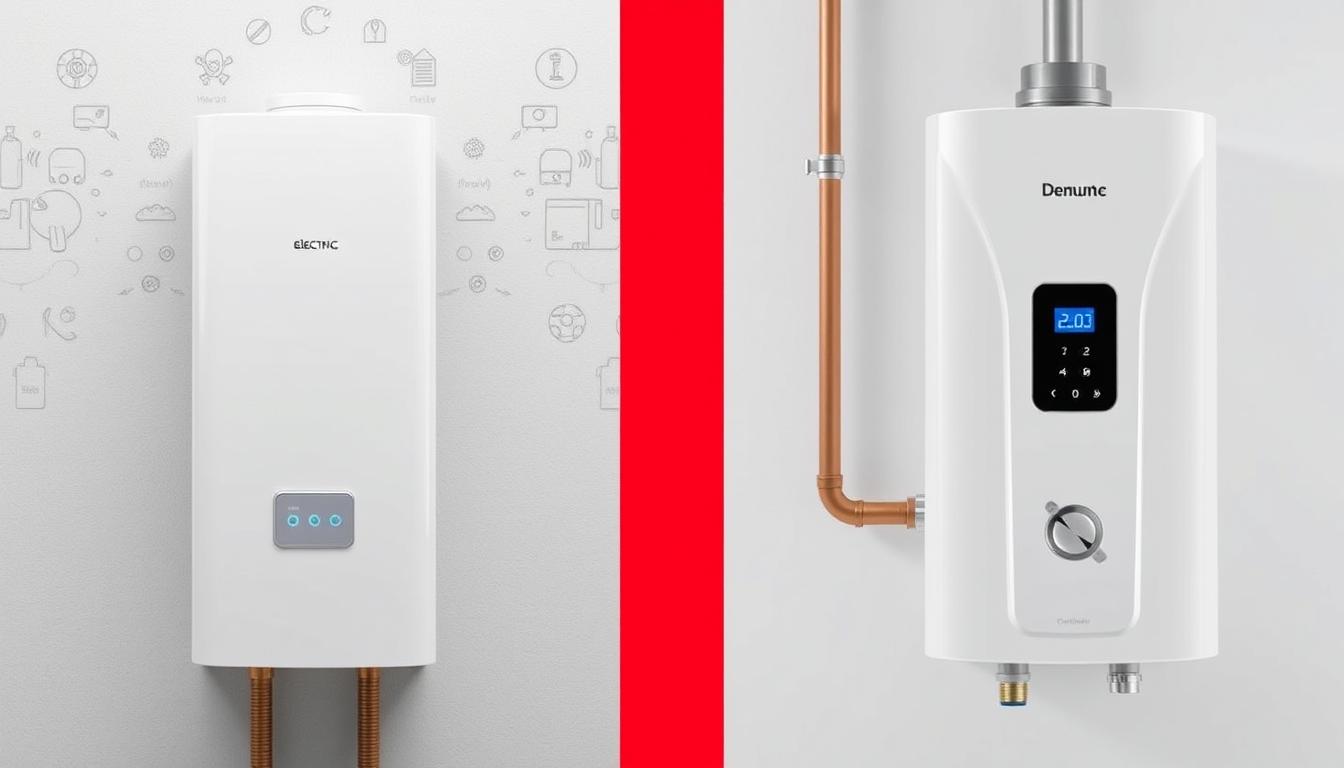
Homeowners are looking for better ways to heat water. They’re turning to tankless water heaters. The debate between electric vs gas tankless water heater is big in home improvement.
Tankless water heaters have their good and bad sides. Electric and gas models have different benefits. Homeowners now have more choices for their water heating needs.
Energy efficiency is key for those who care about the environment. Tankless heaters use less energy than old-style water heaters. They heat water only when needed, saving energy.
Choosing between electric and gas tankless heaters depends on your home. Costs, your home’s setup, local rates, and weather all play a part. Each home is different, so the right choice varies.
This guide will dive deep into electric and gas tankless water heaters. You’ll learn about their tech, how they work, and what they cost. This info will help you make a smart choice for your water heating needs.
Understanding Tankless Water Heater Technology
Tankless water heaters are a new way to heat water at home. They give you endless hot water by heating it as it flows. This means no more waiting for hot water. Plus, they are compact and save space in your home.
How Tankless Systems Heat Water
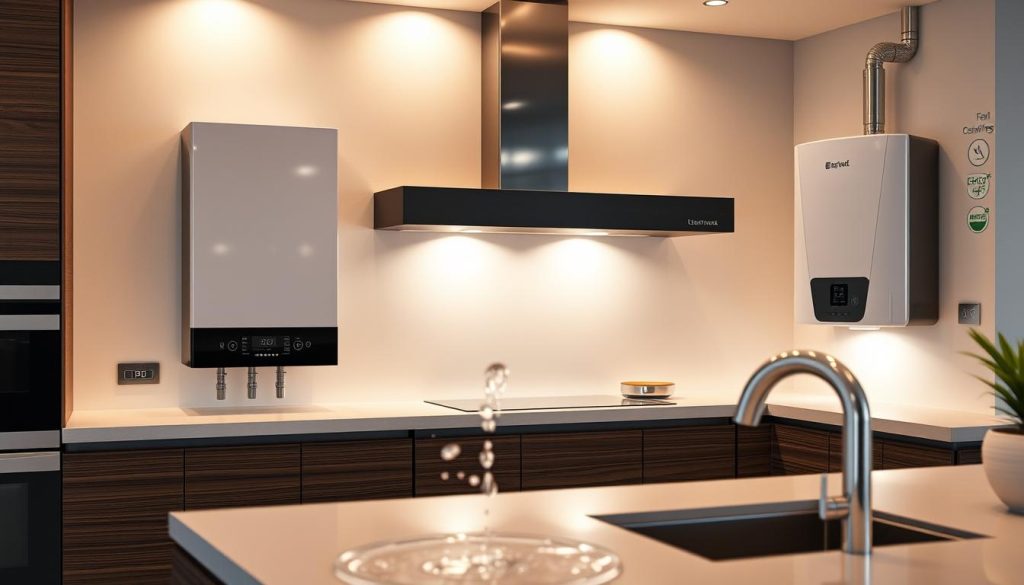
Tankless heaters work in a smart way. When you turn on a hot water tap, cold water goes into the unit. Then, either a gas burner or an electric element quickly heats it up to the right temperature.
- Instant heating mechanism
- On-demand water warming
- No storage tank required
Key Components and Operation
Modern tankless systems have important parts for good performance:
| Component | Function |
|---|---|
| Heat Exchanger | Rapidly transfers heat to water |
| Flow Sensor | Detects water movement and activates heating |
| Temperature Regulator | Maintains consistent water temperature |
Modern Features and Controls
Today’s tankless water heaters have cool digital controls. They let you set the water temperature exactly. You can even control them from your phone, giving you total control over your hot water.
- Digital temperature display
- WiFi-enabled controls
- Energy consumption tracking
Electric vs Gas Tankless Water Heater: A Comparative Look
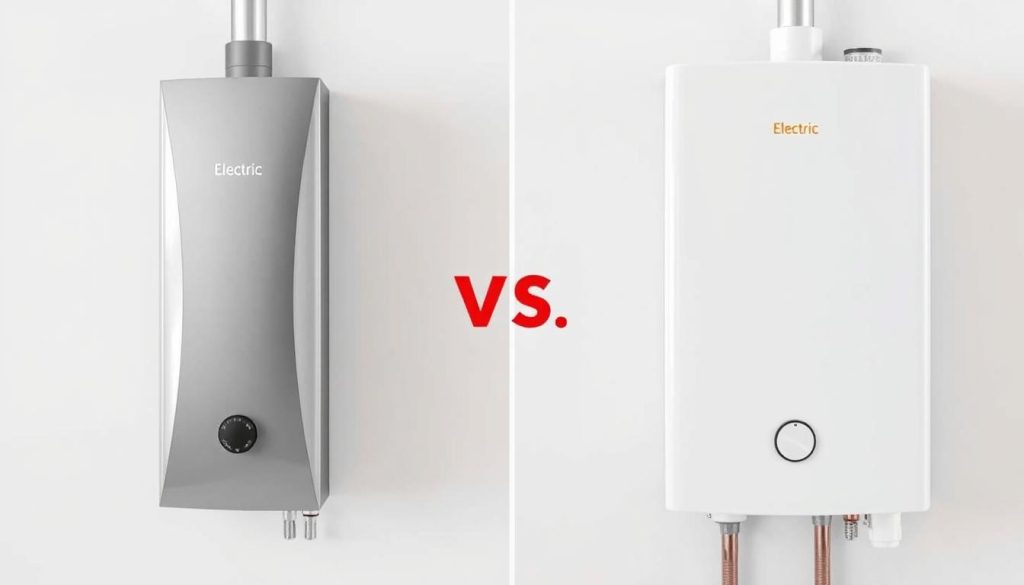
Choosing between electric and gas tankless water heaters can be tough for homeowners. They want efficient hot water solutions. Each type has its own benefits for different homes and energy needs.
When looking at electric vs gas tankless water heaters, several important factors come up:
- Initial installation costs
- Energy efficiency of tankless heaters
- Performance capabilities
- Long-term operational expenses
Gas tankless water heaters are great for homes with lots of hot water needs. Brands like Rinnai have strong gas models. They give consistent hot water for big families.
Electric tankless water heaters are perfect for small spaces and apartments. They’re easy to install and cost less upfront. Stiebel Eltron and EcoSmart are top electric brands. They’re known for being compact and reliable.
| Feature | Gas Tankless | Electric Tankless |
|---|---|---|
| Initial Cost | Higher | Lower |
| Energy Efficiency | 90-95% | 98-99% |
| Installation Complexity | More complex | Simpler |
Pro tip: Think about your home’s hot water needs, energy options, and budget. Each type has its own advantages for different homes.
Initial Purchase and Installation Costs
Buying a tankless water heater requires looking at the upfront costs and what’s needed for installation. The cost to install a tankless heater can change a lot. This depends on several important things that homeowners need to know before they buy.
Equipment Pricing Breakdown
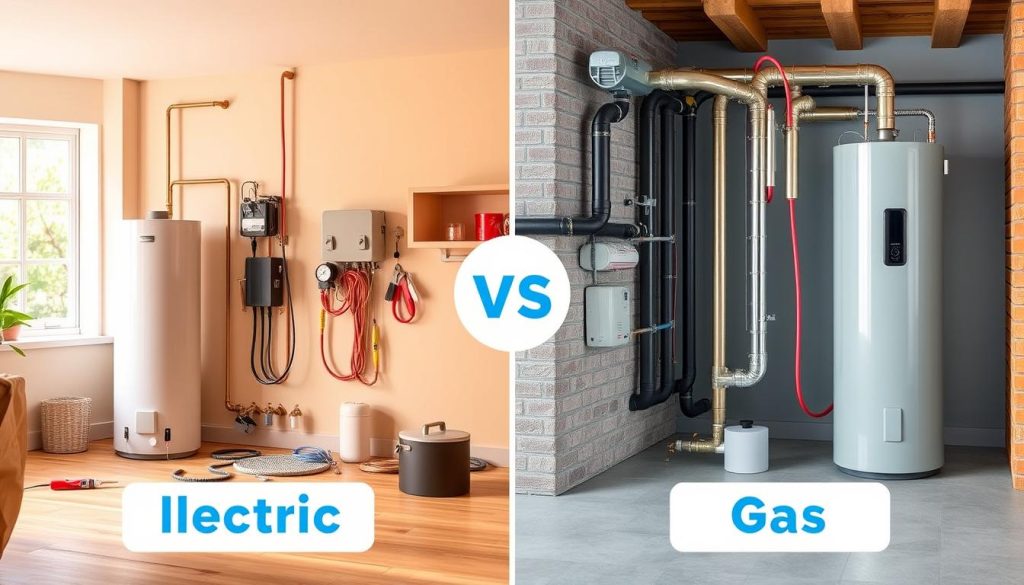
Tankless water heaters have different prices based on their type and size. Electric ones usually cost between $300 and $1,000. Gas models can be more, from $500 to $2,000. The main things that affect the price are:
- Heating capacity
- Energy efficiency rating
- Brand reputation
- Advanced technological features
Professional Installation Requirements
Getting a professional to install it is key for the best performance. The cost to run a tankless heater can go down if it’s installed right. Installation costs can be from $500 to $2,000, based on:
- Complexity of existing plumbing
- Electrical or gas line modifications
- Venting requirements
- Local labor rates
Additional Installation Materials
Homeowners also need to think about extra materials needed. Necessary additional components include:
- Mounting brackets
- Water and gas connection pipes
- Electrical upgrades
- Vent pipe modifications
Knowing these costs helps homeowners make better choices when buying a tankless water heater.
Energy Efficiency and Performance Analysis
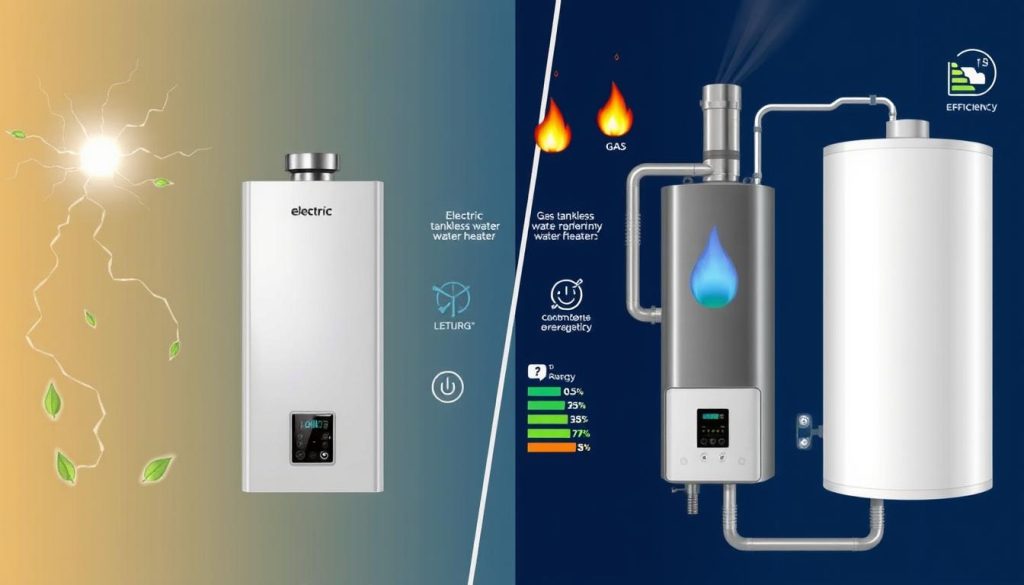
Tankless water heaters are a big step forward in home heating. They don’t store water like old heaters do. This means they only use energy when you need hot water, saving a lot of energy.
How efficient a tankless heater is depends on if it’s electric or gas. Gas models are usually more efficient, reaching up to 95%. Electric ones are a bit less, but they’re way better than old tank heaters.
- Gas tankless heaters: Up to 95% energy efficiency
- Electric tankless heaters: Around 90% energy efficiency
- Traditional tank heaters: Approximately 60-70% efficiency
Several things affect how well a tankless heater works:
- Incoming water temperature
- Flow rate requirements
- Household hot water demand
- Climate and geographic location
Using a tankless heater can save a lot of energy. They don’t waste energy like old heaters do. This can save 10-20% of your water heating costs.
Choosing the right tankless heater is important. Think about how much hot water you use, your climate, and your energy options. This will help you get the most energy savings and performance.
Operating Costs and Monthly Savings
Homeowners need to know the costs of tankless heaters before deciding. These systems are energy-efficient, but there are pros and cons to consider. Looking at the long-term costs helps understand their value.
Energy Consumption Patterns
Tankless water heaters use different amounts of energy. Electric ones use 1.5-3 kWh per hour. Gas heaters can be up to 200,000 BTU per hour efficient.
- Electric tankless heaters: Lower upfront costs
- Gas tankless heaters: Higher initial efficiency
- Average annual energy savings: 24-34%
Utility Rate Considerations
Utility rates in your area affect the cost of tankless heaters. Places with lower electricity or gas prices save more. Check your local energy market to see how much you could save.
Long-term Cost Benefits
Getting a tankless water heater saves money over time. Savings can cover the higher initial cost in 5-7 years. This depends on how much you use it and local rates.
- Reduced energy waste
- Lower monthly utility bills
- Extended equipment lifespan
By looking at costs and savings, homeowners can choose wisely. This helps them decide if a tankless system is right for them.
Environmental Impact and Sustainability
Tankless water heaters are a big step forward in saving energy at home. They are great for those who care about the planet and want to live sustainably. These systems use a lot less energy than old-fashioned tank heaters.
The energy-saving benefits of tankless heaters are huge:
- They cut down on carbon emissions
- They waste less energy
- They use very little energy when not in use
Gas and electric tankless heaters have different effects on the environment. Electric ones can use clean energy from the sun or wind, which can lower carbon emissions. Gas heaters might release more carbon but are better in areas with lots of natural gas.
Water conservation is also key with tankless technology. They only heat water when you need it, saving water and energy.
To get the most environmental benefits, choose high-efficiency models. Think about your local energy sources too. Keeping your tankless heater in good shape and installing it right also helps the planet.
Maintenance Requirements and Lifespan
Keeping your tankless water heater in top shape is key. It ensures it works well and lasts longer. Knowing how to care for your water heater is important.
Regular Service Schedules
Regular maintenance for tankless water heaters is essential. It helps avoid problems and keeps your heater efficient. Here are some important steps:
- Annual professional inspection
- Flushing the system to remove mineral buildup
- Checking and cleaning water filters
- Examining electrical connections and gas lines
Common Repair Issues
Regular maintenance can prevent common issues. These include:
- Mineral scaling in heat exchangers
- Ignition failures
- Circulation pump malfunctions
- Sensor and electronic control issues
Durability Factors
The lifespan of tankless heaters affects their operating costs. Warranties vary from 5 to 15 years. This depends on the model and how well it’s maintained.
| Maintenance Factor | Electric Tankless | Gas Tankless |
|---|---|---|
| Average Lifespan | 10-15 years | 15-20 years |
| Annual Maintenance Cost | $50-$100 | $100-$200 |
| Recommended Service Frequency | Annually | Annually with professional inspection |
Regular maintenance can greatly lower the long-term costs of tankless heaters. It also helps avoid sudden breakdowns.
Space Requirements and Installation Flexibility
Tankless water heaters change the game with their compact design of tankless heaters. They save a lot of space compared to old-style water tanks. This means you can use the space where big tanks used to be for something else.
These heaters can be installed in many ways. You can put them inside or outside, depending on what you need. Gas models need special vents, but electric ones are easier to mount.
- Indoor installation options:
- Utility closets
- Basement areas
- Garage spaces
- Outdoor installation advantages:
- Less space needed inside
- Easy venting for gas models
- Could be more energy efficient
When you’re thinking about the cost of installing a tankless heater, remember the cost of upgrading your electrical panel. This might be needed for electric models to work right. It could add to the upfront cost.
| Installation Type | Electric Tankless | Gas Tankless |
|---|---|---|
| Average Space Required | 2-3 sq ft | 3-4 sq ft |
| Venting Requirements | Minimal | Specific ventilation needed |
| Electrical Upgrade Likelihood | High | Low |
Getting a pro to install your tankless water heater is a smart move. They know how to place it for the best performance. They can also help avoid any installation problems.
Water Flow Rates and Capacity Considerations
Understanding water flow rates is key when looking at tankless water heaters. These systems offer endless hot water with unique features. They differ from traditional tank models.
Peak Demand Handling
Tankless water heaters handle peak demand with advanced flow rate tech. Homeowners need to think about a few important things:
- Gallons per minute (GPM) capacity
- Simultaneous fixture usage requirements
- Household hot water consumption patterns
Multiple Fixture Usage
Various tankless water heater models can handle different numbers of fixtures at once. Knowing your household’s needs is key to picking the right one.
| Fixture Type | Average GPM | Recommended Tankless Capacity |
|---|---|---|
| Shower | 2.1 GPM | High-capacity models |
| Dishwasher | 1.5 GPM | Medium-capacity models |
| Washing Machine | 2.0 GPM | High-capacity models |
Temperature Rise Capabilities
The temperature rise a tankless water heater can achieve is important. Groundwater temperature and desired output temperature affect its performance.
- Gas models heat water faster
- Electric models work best in mild climates
- Temperature rise ranges from 30-70 degrees Fahrenheit
Climate Considerations and Regional Factors
Choosing the right tankless water heater depends a lot on your local climate and area. The performance of different brands can change a lot based on where you live. It’s important to know how local factors affect your choice.
Climate is key when looking at tankless water heater pros and cons. Places with very cold water need special units. Both electric and gas models face challenges in such conditions.
- Cold Climates: Require higher-capacity units with robust temperature rise capabilities
- Warm Regions: Can utilize more energy-efficient models with lower demand
- Altitude Considerations: Impact heating performance and fuel combustion
Top tankless water heater brands make units for specific areas. They design models for extreme temperatures or unique places.
| Climate Zone | Recommended Tankless Type | Performance Considerations |
|---|---|---|
| Northern Regions | High-capacity Gas Models | Enhanced temperature rise capabilities |
| Southern Regions | Compact Electric Units | Lower energy consumption |
| Mountain Areas | Specialized High-Altitude Units | Adjusted combustion settings |
Energy prices and fuel availability matter a lot. Places with cheap natural gas might choose gas heaters. Areas with steady electricity rates might prefer electric ones.
Knowing your local environment helps pick the best tankless water heater. This ensures the best performance and efficiency for you.
Safety Features and Regulations
Choosing the right tankless water heater is all about safety. Top brands focus on safety features to keep homeowners safe and systems running well.
Today’s tankless water heaters have many safety features. These help prevent accidents while they’re working:
- Automatic shut-off systems for overheating protection
- Advanced gas leak detection sensors
- Electronic freeze protection mechanisms
- Pressure relief valve functionality
Keeping these features in good shape is key. Regular checks by experts can spot issues early.
| Safety Feature | Purpose | Risk Mitigation |
|---|---|---|
| Overheat Protection | Prevents system damage | Automatic shutdown if temperature exceeds safe limits |
| Gas Leak Sensors | Detect dangerous gas emissions | Immediate system halt and alert mechanism |
| Electrical Safety Switches | Protect against electrical malfunctions | Interrupt power during possible short circuits |
Local laws set rules for installing tankless water heaters. Homeowners need certified pros to follow these rules and ensure systems work right.
Right installation, upkeep, and following the maker’s advice are vital. They keep tankless water heaters safe and working for a long time.
Conclusion
Choosing between electric and gas tankless water heaters needs careful thought. Each has its own benefits and downsides. These can greatly affect your home’s comfort, energy use, and costs over time.
Electric models are great for small homes with less hot water use. They cost less upfront and need little upkeep. On the other hand, gas tankless water heaters offer more water flow. They’re better for bigger homes with lots of hot water needs.
When deciding, think about local energy prices, your area’s climate, and your budget. Getting advice from a pro can help figure out what’s best for your home. They can suggest the right tankless water heater for your needs.
Understanding the differences between electric and gas tankless water heaters is key. It helps you choose wisely. You’ll find a balance between saving energy, money, and keeping your home comfortable.